
Alamosa County Criminal Court Cases
Alamosa District Court hears felony cases. Alamosa County Court handles misdemeanors, traffic matters, and preliminary steps that fall within its authority. Both sit in the Alamosa Combined Court at 8955 Independence Way, Alamosa, CO 81101. The clerk counter and court administration share that site. The court lists weekday hours from 8:00 a.m. to 5:00 p.m. and a main number of 719-589-4996. A case number such as 2025CR128 identifies the filing year, criminal case class, and sequence.
Alamosa Municipal Court is separate. It hears city-code, parking, traffic, and municipal misdemeanor cases at the city level. A city citation may never become a District Court felony file. Ask which law was charged and which court appears on the citation before ordering a record.
Alamosa Court Split Avoids Wrong Searches
The most common local error is treating every Alamosa County criminal matter as one courthouse file. A felony belongs with District Court. A state misdemeanor generally belongs with County Court. A city ordinance allegation remains with Municipal Court unless a separate state charge was filed. The arresting agency does not decide where the final court record lives.
Read the citation, release sheet, or hearing notice first. The named court and case number are stronger clues than the arrest location. For a city event that led to state charges, check both the municipal contact and the Combined Court. The two files may document different parts of the same encounter.
Municipal Court statistics also need careful labels. Alamosa reported 874 police-filed violations in 2022, but that figure counts filings, not people, arrests, or convictions. One event can produce several violations. Some cases remain open, and others end without a guilty result. Tyler reminder calls, text notices, and remote appearances help defendants attend court, yet none is a public case-search database.
Searching Alamosa County Case Records
The free Colorado Judicial docket search is a calendar tool, not a full person-based criminal history. Select Alamosa County and a likely hearing date. Save the case number, then use the Judicial Record/Document Request form or call the clerk for the register of actions, charging paper, final disposition, sentence, or a certified copy.
- Choose Alamosa as the county or court location and set a narrow calendar window.
- Review the District or County Court listing for the expected hearing and party caption.
- Copy the complete case number, courtroom, event type, date, and judicial officer.
- Ask the clerk for the register of actions and final disposition before ordering a broad file.
- State whether inspection, an electronic copy, certification, or a transcript is needed.
| Field Label | Type | Required | Notes |
|---|---|---|---|
| County or Location | Dropdown | Yes for local use | Select Alamosa County |
| Date Range | Date control | Yes | Use the likely docket calendar window |
| Judicial District | Filter | No | Choose the 12th Judicial District when offered |
| Court Type | Filter | No | Distinguish District Court from County Court |
| Page | Pagination | No | Calendar results may span several pages |
When Alamosa Files Are Off Site
An older Alamosa County case may not be available for immediate counter review. The Colorado Judicial record request form lets the requester identify the county, court division, case number, party names, and exact documents needed. Ask the clerk whether the file is stored off site and whether retrieval time or a fee estimate applies before traveling to the Justice Center.
Requesting a register of actions first can identify the useful pleadings, orders, judgment, and sentence without paying to reproduce an entire file. For a certified result, say which document must carry certification. The official document request channel is also the fallback when a name does not appear in the limited public docket schedule.
Alamosa Clerk Requests That Work
A useful court request names the Alamosa location, case number, parties, and exact document. The Judicial Branch form asks for delivery and contact details too. If the title is unclear, request the register of actions and final disposition first. That pair shows the event sequence and outcome without forcing staff to interpret a request for “everything.”
Certification, exemplification, extensive copying, and off-site retrieval can add charges. A transcript follows a separate district policy. Identify the hearing date, judicial officer, and approximate duration when seeking one. Parties and their attorneys may face a $15 maximum for certain document requests, while other requests follow Chief Justice Directive 06-01. Ask for an estimate before work begins.
The clerk is also the practical source for a disposition needed to correct a state criminal-history entry or pursue sealing. Bring the case number when possible. If the docket search produced only a caption and hearing date, give those details and ask staff to confirm the correct case before copying documents. Older records may require retrieval, so state a deadline only as a request and not as an assumed service time.
Alamosa Combined Court
8955 Independence Way
Alamosa, CO 81101
719-589-4996
Monday through Friday, 8:00 a.m. to 5:00 p.m.
Inside an Alamosa County Case File
The court file tracks litigation rather than police intake. It can contain the charging document, motions, orders, hearing entries, pleas, judgment, sentence, restitution, and financial entries. A docket result is only an index to this richer file. It may show that a hearing is set, but it does not promise a free download of each pleading.
| Case Number & Court | Shows filing year, case class, sequence, division, and the court holding the file. |
|---|---|
| Charging Document | Lists formal counts filed by complaint, information, or indictment. |
| Docket Entries | Chronological filings, hearings, rulings, and administrative events. |
| Hearing Dates | Scheduled date, time, courtroom, event type, and judicial officer. |
| Disposition & Judgment | Shows the outcome of each count, including dismissal, acquittal, or conviction. |
| Sentence & Conditions | Records custody, probation, fines, restitution, and other court orders. |
Read Alamosa Criminal Docket Terms
A docket entry marks a procedural step. It is not an outcome by itself. “Advisement” means the court explained the accusations and rights. “Arraignment” is the hearing where a plea is entered. “Disposition” is the result of a charge. A “deferred judgment” delays judgment under set terms and may permit dismissal if those terms are met.
- Complaint
- A filed accusation that can begin a criminal case.
- Information
- A charging document filed by the prosecutor.
- Dismissal
- An end to a count without conviction.
- Restitution
- Court-ordered payment for qualifying victim loss.
Read each count on its own. One count may be dismissed while another ends in a plea. A later amended filing may also replace the charge described at arrest.
A plea agreement is a negotiated proposal that still requires court action. An acquittal is a not-guilty decision. A conviction is a judgment of guilt, while a sentence is the consequence ordered after that judgment. Concurrent sentences run together; consecutive terms run one after another. These distinctions explain why a short docket label should be checked against the signed order or judgment.
How an Alamosa Criminal Case Moves
An arrest or summons can precede advisement and bond review. The prosecutor then files a complaint or information, or a grand jury returns an indictment. A felony may include a preliminary hearing unless it is waived or displaced by indictment. Arraignment produces a plea. Motions and conferences follow, then a negotiated result or trial. A guilty result leads to judgment and sentence. Appeals or post-conviction filings may continue later.
Case flow: Charges Filed › Arraignment › Pretrial › Plea or Trial › Disposition › Sentencing
Timing varies with the charge, custody status, motions, and court calendar. A pretrial setting means the Alamosa County case remains pending. It does not show guilt.
The 12th Judicial District covers Alamosa, Conejos, Costilla, Mineral, Rio Grande, and Saguache counties. Its regional structure makes location filters important. An official district profile reported 833 new Alamosa District Court filings in fiscal year 2024. That total describes workload, not criminal convictions, and it should not be used to infer the outcome of any case.
Virtual courtroom links and live-caption information appear on the official Alamosa court page. Remote access is a way to observe or attend an authorized proceeding. It is not a record request. For a lasting copy, return to the clerk and name the docket entry, order, recording, or transcript sought.
Federal Cases Beyond Alamosa Courts
Federal charges from Alamosa County belong to the U.S. District Court for the District of Colorado, not the county clerk. PACER provides federal dockets and available documents after account registration. Fees and waiver thresholds should be checked at the time of use. BOP Inmate Locator covers federal custody, while Colorado's state locator covers state sentences.
The FBI electronic request portal supplies a person's own nationwide fingerprint-linked Identity History Summary for an $18 FBI fee. It is not a public search for another person's court file. No federal prison is located in Alamosa County.
The FBI portal shown in the approved source image illustrates the subject-request route.
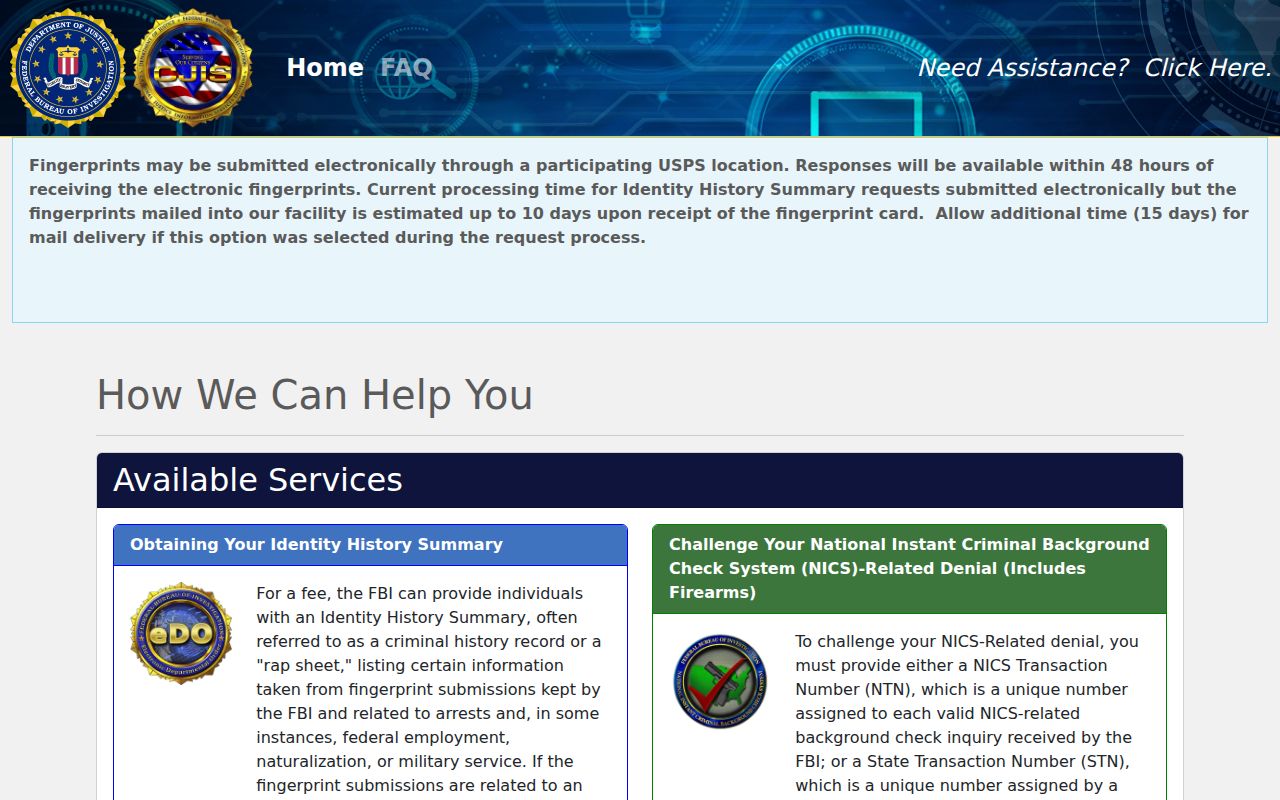
That route answers a personal identity-history question, not a request for an Alamosa court pleading.
The PACER gateway image shows where federal docket searches begin.
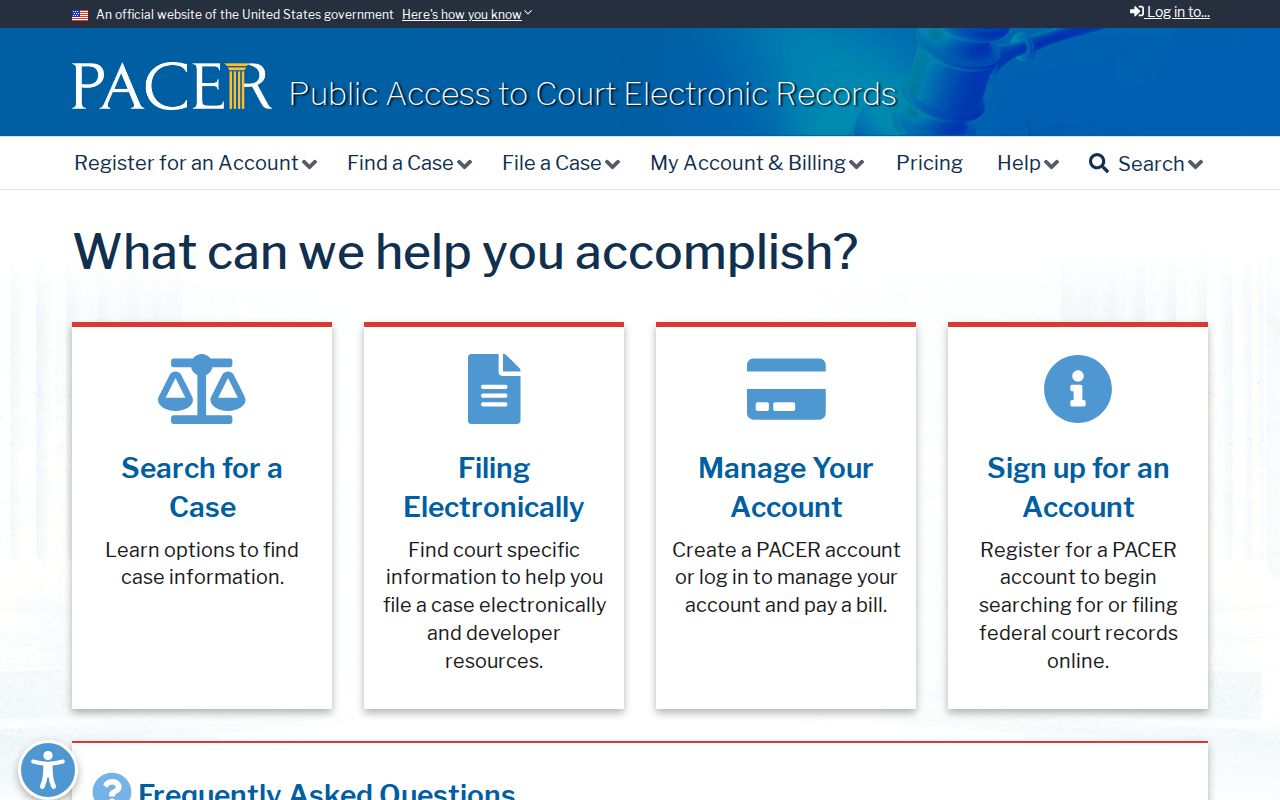
PACER should be used only when the matter is federal rather than a Colorado county case.
The federal inmate locator image identifies the separate custody channel.
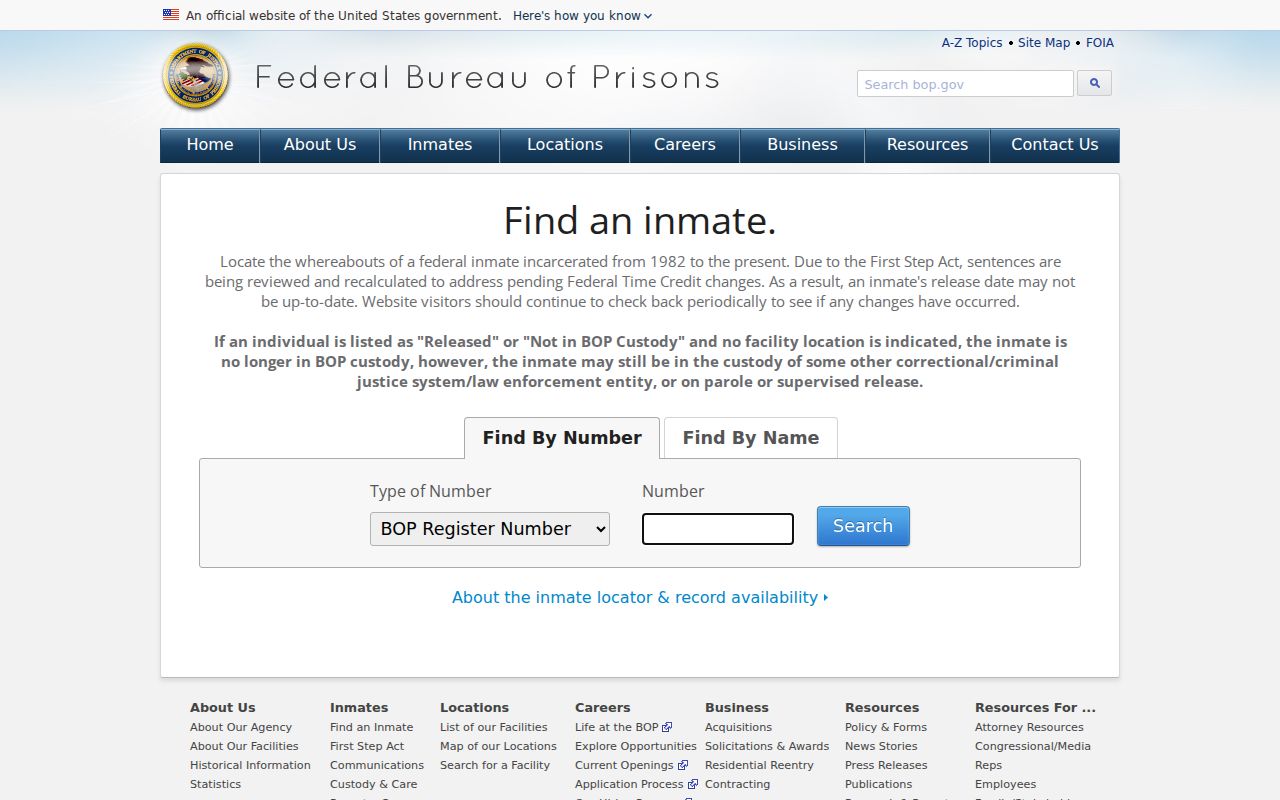
Custody location cannot replace the federal docket or the court's final judgment.
Case Record Access & Restrictions
Colorado court access follows Chief Justice Directive 05-01, while criminal-justice disclosure also reflects the Colorado Criminal Justice Records Act. Filed official actions are generally open, but sealed cases, juvenile records, protected victim or minor data, medical details, account numbers, and safety-sensitive facts can be withheld or redacted.
A missing online result does not prove that no Alamosa County criminal court case exists. The date window may be wrong, a file may be older or off-site, the matter may be municipal, or access may be restricted. Give the clerk the exact name, likely filing year, and known case number. Ask whether a public register or disposition can be supplied.
CORA governs ordinary Colorado public records, while CCJRA governs criminal-justice records held by police and similar custodians. Court records follow Judicial Branch access rules. The distinction determines where to send a request. The clerk supplies filed complaints, motions, orders, dispositions, and sentences. The sheriff or police department handles the officer narrative, booking sheet, body-camera material, and other investigative records. Sending a police-evidence request to the Combined Court will not make that material part of the court file.
Records of official action, including an arrest, charging decision, disposition, release, and a decision granting or ending probation or parole, receive open-record treatment under CCJRA. The facts behind that action can still require custodian review. Active investigation details, victim identifiers, juvenile information, medical facts, and security-sensitive material may be withheld. If access is denied, ask for the legal basis and whether a narrower record or inspection can be provided.
For related local routes, the Alamosa County Arrest Lookup explains how agency and booking records differ from filed pleadings.