
Sex Offender Checks in Alamosa County
The Colorado Sex Offender Registry is the first official channel for public Alamosa County sex offender records. The Colorado Bureau of Investigation, or CBI, maintains the statewide system. Local law enforcement registers people and sends verification data to the state. Searchers may use a legal name, Alamosa County, a city, ZIP code, or an address where the interface permits it.
A second channel is the registering agency. An address within Alamosa city may involve the Alamosa Police Department, while an address elsewhere in Alamosa County may involve the Sheriff's Office. Confirm which office holds the registration before asking about an entry. For a move across a state line or uncertainty about where a person now resides, add the federal national search. Each channel answers a different part of the question, so one negative name search should not end a safety check.
Alamosa Name and Address Searches
Name and geographic searches solve different problems. A name query works best when the searcher has the legal surname and can compare a first name, aliases, photograph, and physical traits. Common names can produce more than one result. A geographic query begins with an address, city, ZIP code, or county and is better suited to neighborhood awareness. It can also catch a record whose city label or rural mailing address differs from what a reader expects.
Do not treat the map marker as the whole record. Open the profile and compare identifiers. An offense description identifies the conviction that created a registration duty. It does not claim that a new act occurred at the listed residence. Rural postal descriptions around Hooper and unincorporated Alamosa County can also make a county filter more dependable than a town-name query.
How to Search the Colorado Sex Offender Registry
CBI's public interface presents the statutory subset of records available to the public. It is not the complete law-enforcement file stored in CCIC. Start broad enough to avoid a false negative, then narrow only with identifiers known to be accurate.
- Open the official registry and read its conditions of use.
- Enter a surname, or choose an address-based geographic search.
- Add Alamosa County, city, ZIP code, or radius when those controls fit the question.
- Open likely profiles and compare the photograph, aliases, description, status, and offense data.
| Field | Type | Required | Use |
|---|---|---|---|
| Last Name | Text | Conditional | Starts a name search |
| First Name | Text | No | Narrows a surname |
| City | Text or selection | No | Use Alamosa or Hooper |
| County | Selection | No | Choose Alamosa |
| ZIP Code | Text | No | Five-digit area filter |
| Address and Radius | Geographic controls | Conditional | Find records near a place |
Alamosa Registry Screens Explained
The official Colorado registry search screen shows how the state separates name and place controls.
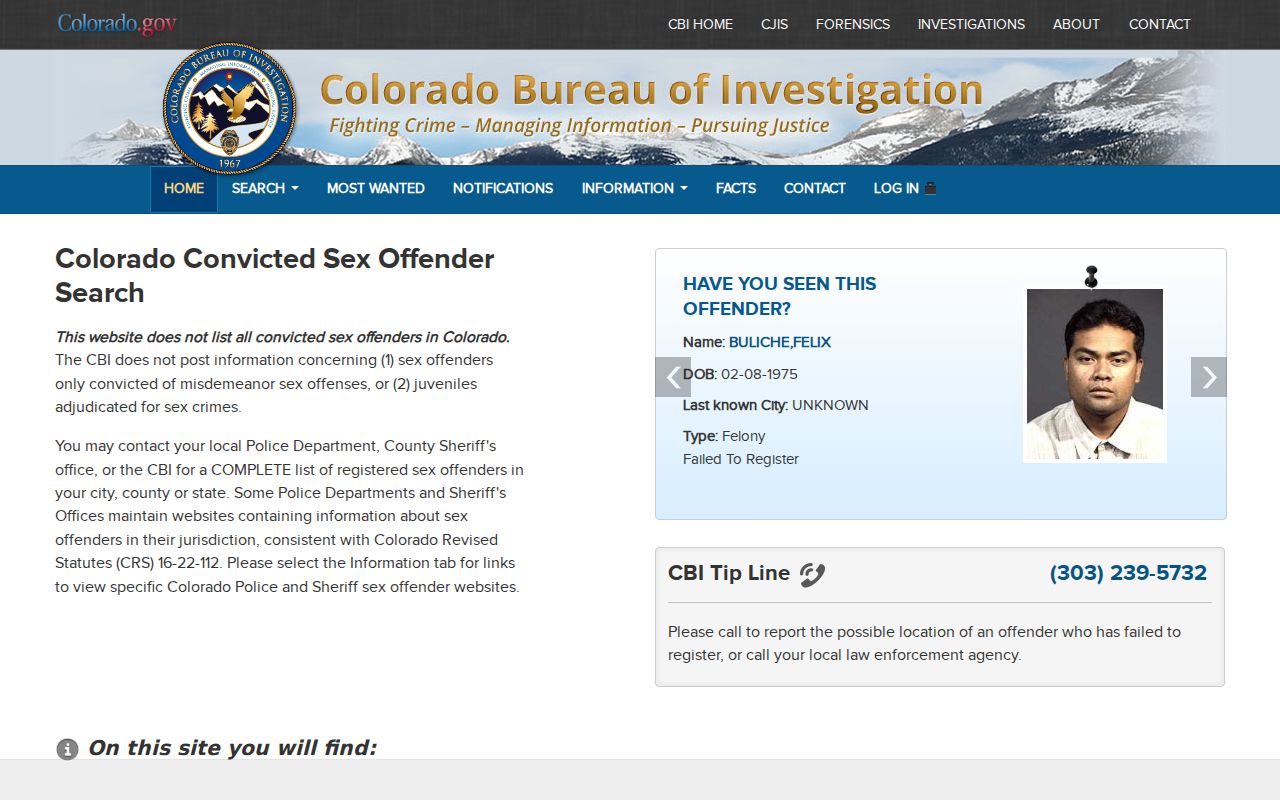
The screen reinforces why a county filter and exact identifiers work better together than a map glance.
CBI also publishes registration administration guidance for court orders, local agencies, and statewide processing.
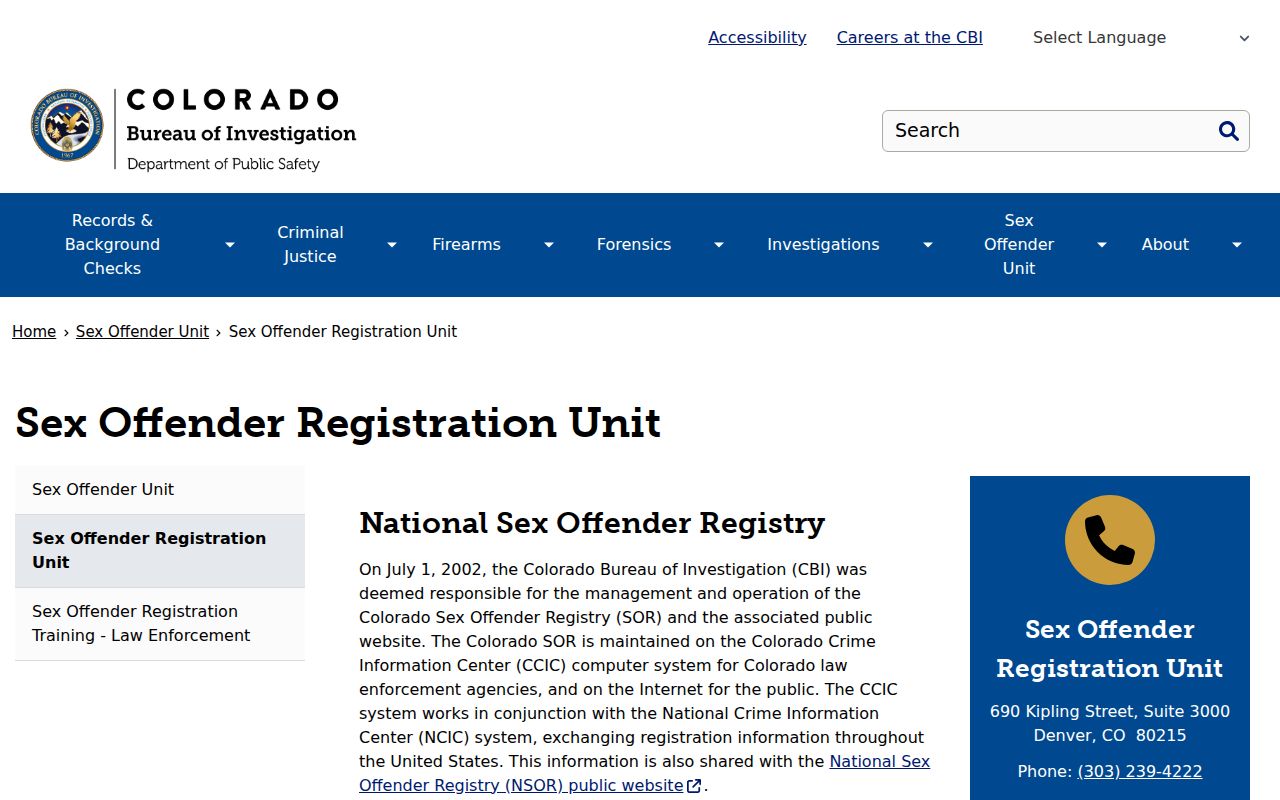
That guidance is the official path for questions about how registration information reaches the public database.
Inside an Alamosa Registry Profile
A public profile helps distinguish one person from another and explains the conviction tied to the registration duty. The exact fields depend on what is supplied and what Colorado law authorizes for public release. Absence of a field does not prove that law enforcement lacks it.
| Name and Aliases | Published identity names used for matching |
|---|---|
| Photo and Description | Photograph, sex, race, height, weight, hair, eyes, and marks when public |
| Address | Residence or another permitted location description |
| Registration Details | Jurisdiction and current public status |
| Qualifying Offense | Description, statute, conviction jurisdiction, and date when displayed |
| Other Details | Vehicle information or other authorized identifying data when supplied |
Read the offense and registration blocks as separate facts. The conviction created the duty. The status describes the registry entry. Neither field should be stretched into a claim about present conduct.
Alamosa Searches Across State Lines
The National Sex Offender Public Website, or NSOPW, adds participating jurisdiction searches outside Colorado.
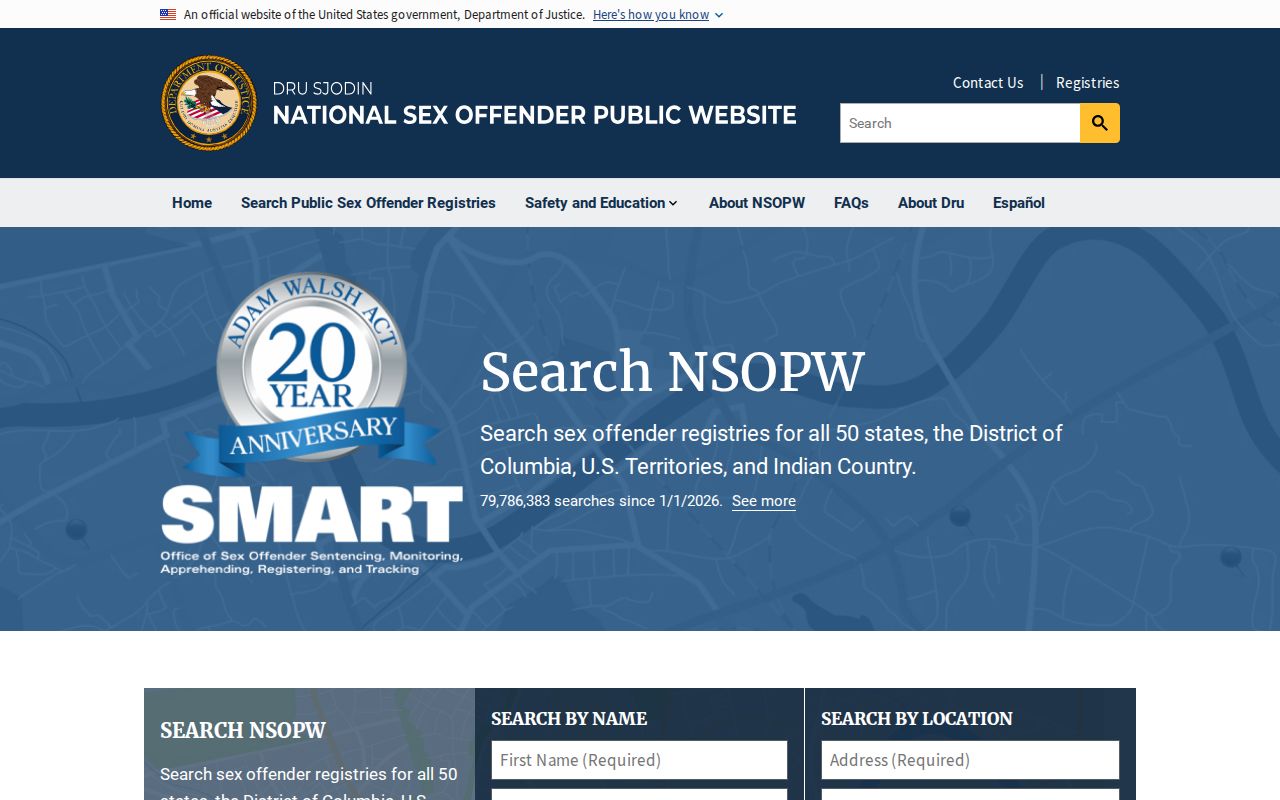
Use it when a person may have moved, works across state lines, or has an address near a jurisdiction boundary. NSOPW links searchers back to the participating public record rather than replacing the state custodian.
A Colorado result still deserves Colorado verification. Search neighboring areas when a recent move is possible, compare aliases and physical details, and follow the linked jurisdiction record. The national layer is useful, but participating agencies control their own data and update schedules.
Colorado Registration Levels and Requirements
Colorado does not explain every duty through a simple federal Tier I, II, or III chart. The conviction statute, repeat status, court orders, and designated category control the schedule and length. General registrants commonly report each year and after required changes. Certain categories report quarterly. A sexually violent predator designation carries heightened community-notification rules and should never be inferred from an offense name alone.
| Colorado category | Verification | Duration and visibility |
|---|---|---|
| General qualifying adult registrant | Commonly annual and after required changes | Statutory period; a petition to discontinue may be possible |
| Quarterly or lifetime category | Quarterly and after changes | Often lifetime unless statute or court allows discontinuation |
| Sexually Violent Predator | Quarterly | Heightened notification and lifetime framework |
| Qualifying juvenile adjudication | Special rules | Narrower access and court-specific discontinuation |
The governing framework is in C.R.S. sections 16-22-101 through 16-22-115. A court or qualified attorney should assess an individual's end date.
When an Alamosa Address Looks Stale
A stale-looking address is a reason to verify, not confront. First compare the exact profile, status, identifiers, and registration jurisdiction. Then record the disputed field and the factual basis for concern. Contact the Alamosa Police Department or Alamosa County Sheriff's Office according to the location. If the correct registering office is unclear, ask either agency which custodian covers the address.
The local agency is best placed to investigate a possible move or reporting lapse. CBI handles statewide administration. A resident can also send the profile identifier and a concise description of the issue to the appropriate official channel. Avoid social-media accusations. Database lag, an allowed address description, or a recent lawful change can explain what appears inconsistent.
Ending an Alamosa Registration Duty
An eligible person must petition the proper court when Colorado law permits discontinuation. The result is not self-executing across every system. Once the court enters an order, the registrant must provide it to CBI and the local registering agency. CBI says a later criminal-history report without the registered-sex-offender notation can confirm its processing.
This sequence matters because a signed order, local registration file, statewide notation, and public display are separate records. A person reviewing their own Alamosa County criminal history should keep proof of delivery and check each official channel. Broader self-review routes are described in the county criminal history overview.
Community Notification and Lawful Use
Public registry records support personal, family, and community safety. Community notification is strongest for people legally designated as sexually violent predators. Searchers should use published information to plan and to communicate factual concerns to law enforcement. They must not use it as permission to threaten, intimidate, shame, or take vigilante action.
Use registry information lawfully: Colorado law prohibits misuse of registry data to harass, threaten, or intimidate. Report suspected noncompliance to law enforcement and never confront the person.
For an Alamosa County concern, give the agency an exact name or profile identifier, location, and objective facts. Let trained officers verify the address and duty. The registry can be incomplete or delayed, and only the responsible agency can determine whether a violation occurred.
A careful community-awareness search also has limits. Repeat a geographic search with the exact address and a wider nearby radius, then compare it with an Alamosa County filter and NSOPW. Save the official profile identifier rather than copying an unverified summary. If two records seem to describe the same person, compare photographs, aliases, birth information, physical details, offense jurisdiction, and registration office before asking law enforcement to clarify. These checks reduce mistaken identity without turning a public safety record into an accusation.